
Duration
January - April 2024
Role
UI/UX Designer
UX Researcher
Full-stack Developer
Team
Sudheendra Hangal (Advisor)
Skills
Plugin Development
Interaction Design
Surveying
Usability Testing
// EGOVERNANCE, DESIGN & DEV. TOOL
// INTRODUCTION
The "Digital India" dream is a far reality
Indian eGovernance has become notoriously known for practically unusable and unmaintained portals.
Unfortunately, usability concerns are overlooked because of time and resource constraints. Instead, portals seek to share as much information as possible, becoming messy data dumps.
Sociotechnical context makes this an urgent problem: 2015's "Digital India" campaign pushed critical citizen services online, but a recent slip in the E-Government Development Index (EGDI) rankings signals a loss of access for millions of citizens.
// DEFINING THE PROBLEM
This project's problem statement saw many twists and turns (read more in "The Pivot"), owing to the complex, sociotechnical context. Multiple stakeholders, starting from the government
// SOLUTION HIGHLIGHTS
Introducing Protoflow: A development and prototyping tool built for the unique UX challenges of Indian eGovernance
Standardize styles
Remove visual inconsistencies by simply copying over styles from one element to another
Tooltips and visual aids
Unclear terms and acronyms can be hard to navigate; on-hover tooltips provide critical details
Reduce clutter
Optimize site loading speeds by removing large images and irrelevant content
// USER RESEARCH
75+ angry respondents struggled with cluttered, slow, and buggy UI
To understand the scope of usability issues faced across eGovernance portals, I designed a survey targeting Indian citizens aged 18-60. This was an intentionally broad sample since most adult citizens use these portals at least once in their lifetime.
// DESIGN AUDIT
Google Pay from the eyes of a merchant
Before jumping into ideation, we wanted to first feel the app from a merchant's perspective. Due to time and research recruitment constraints, we chose to audit existing screens ourselves, building on a user journey map to identify where the experience breaks down.
A cognitive walkthrough revealed 3 specific problem areas:
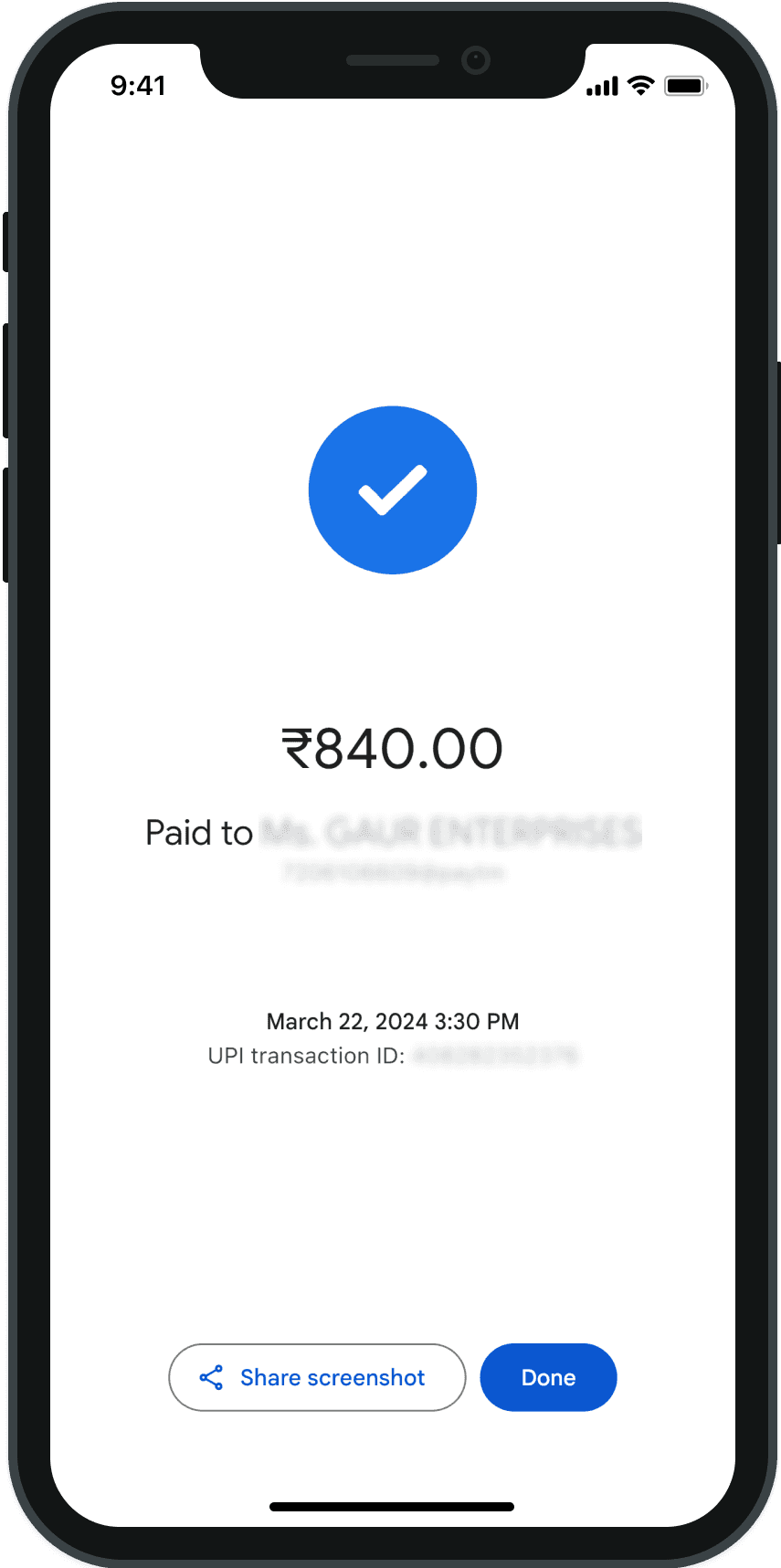
Transaction validation is difficult
Hard-to-access or non-unique information means greater effort from a merchant to confirm transaction status
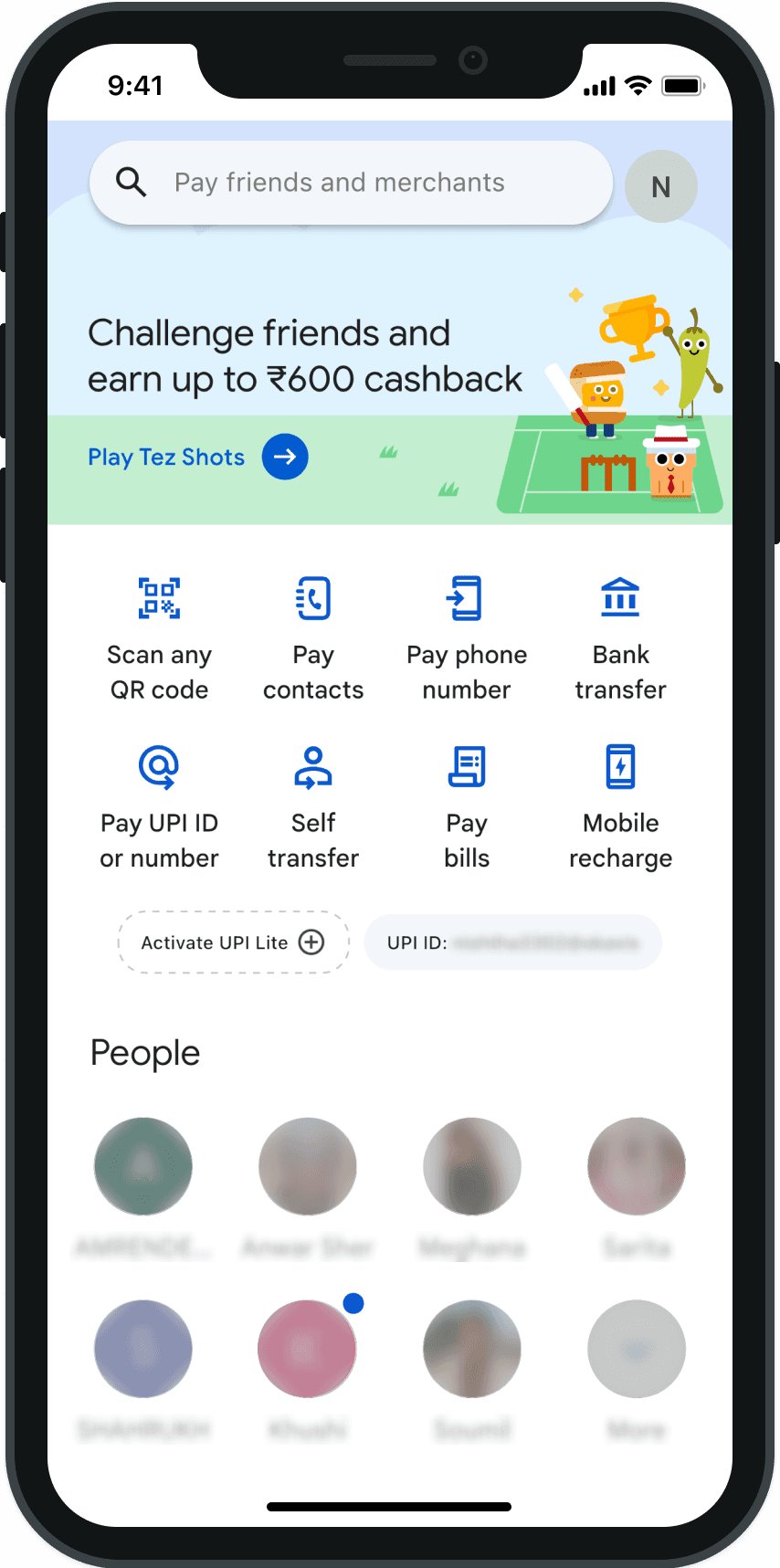
Missing urgency in actions
Defrauded merchants need immediate access to support and resources but this is overshadowed by promotional material
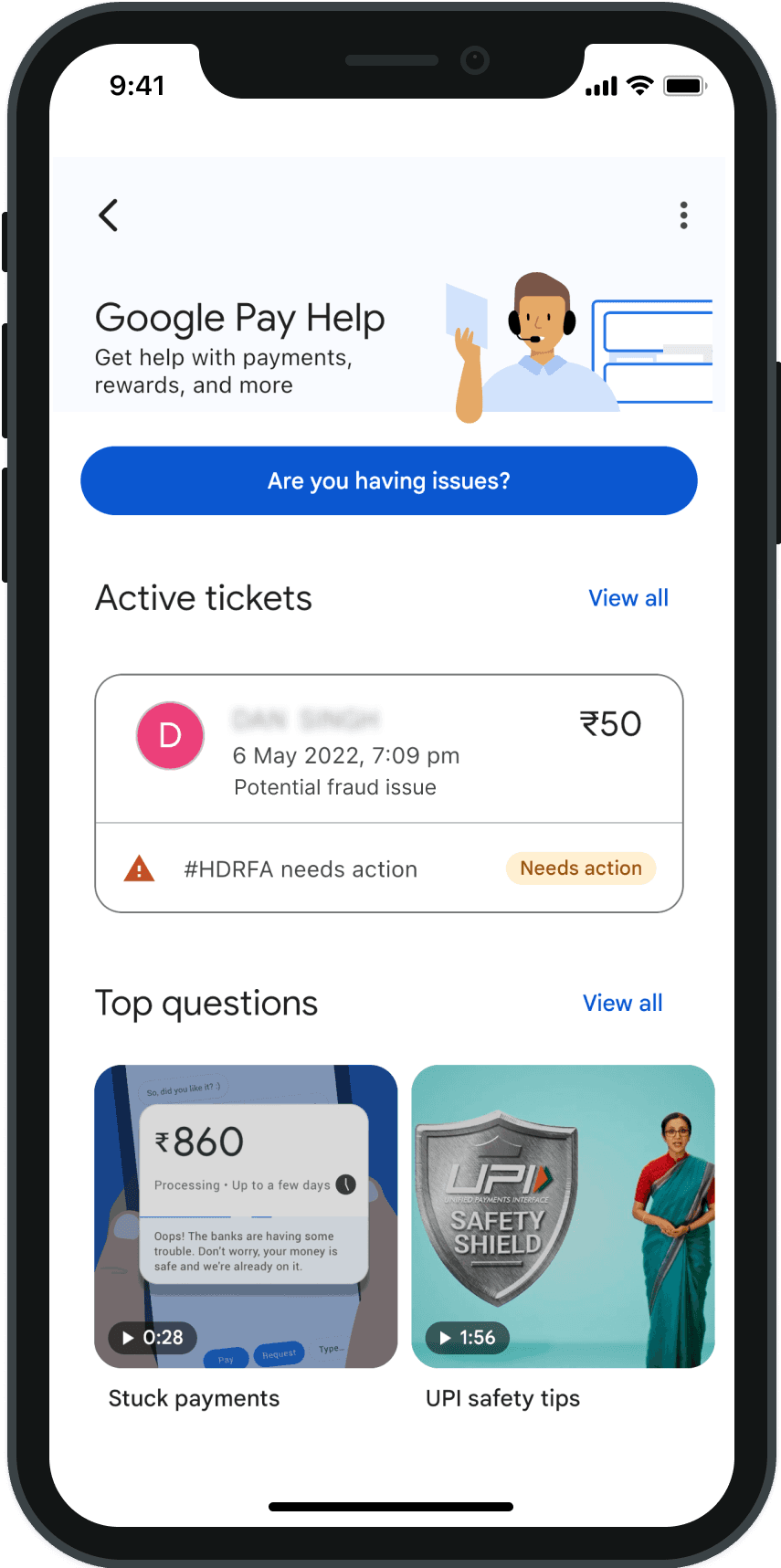
Lack of information transparency
Merchants can't estimate the scale or nature of the reporting process, which is critical data for a low-income worker
// DESIGN PROCESS
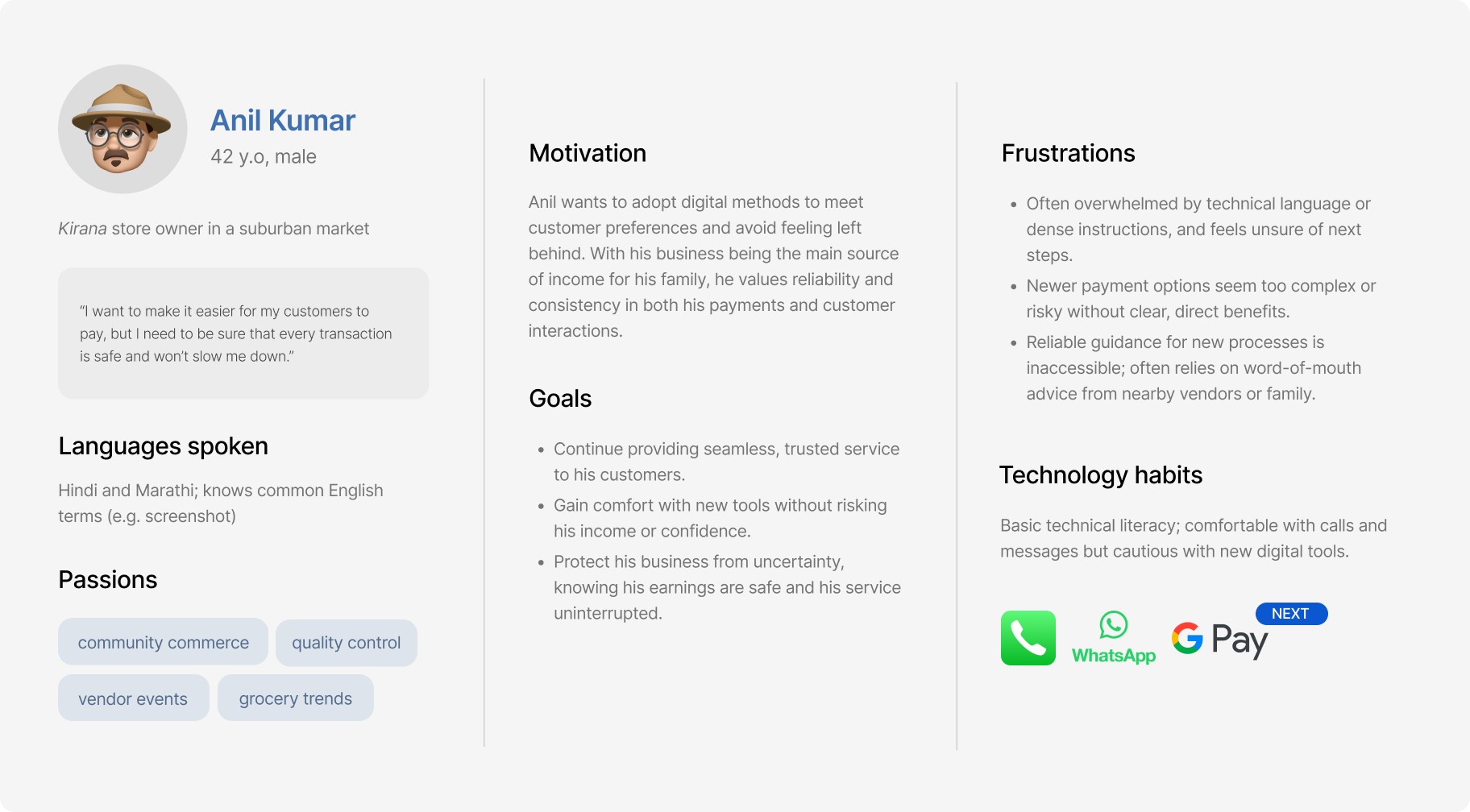
User persona
Representing a typical kirana store owner in suburban India, balancing community relationships with digital adoption challenges
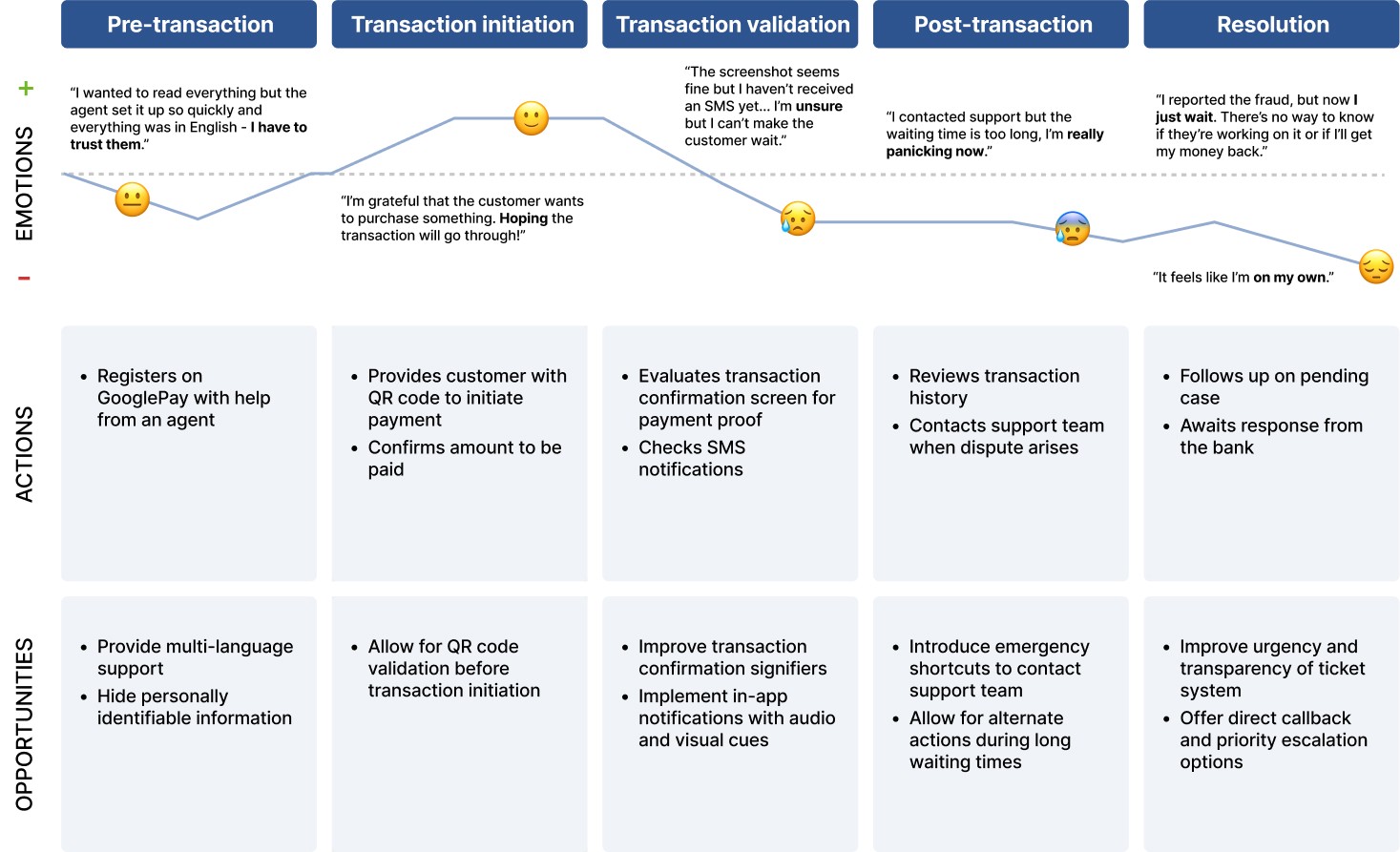
User journey Map
Mapping emotional highs and lows from pre-transaction anxiety to post-fraud frustration, identifying opportunities for intervention
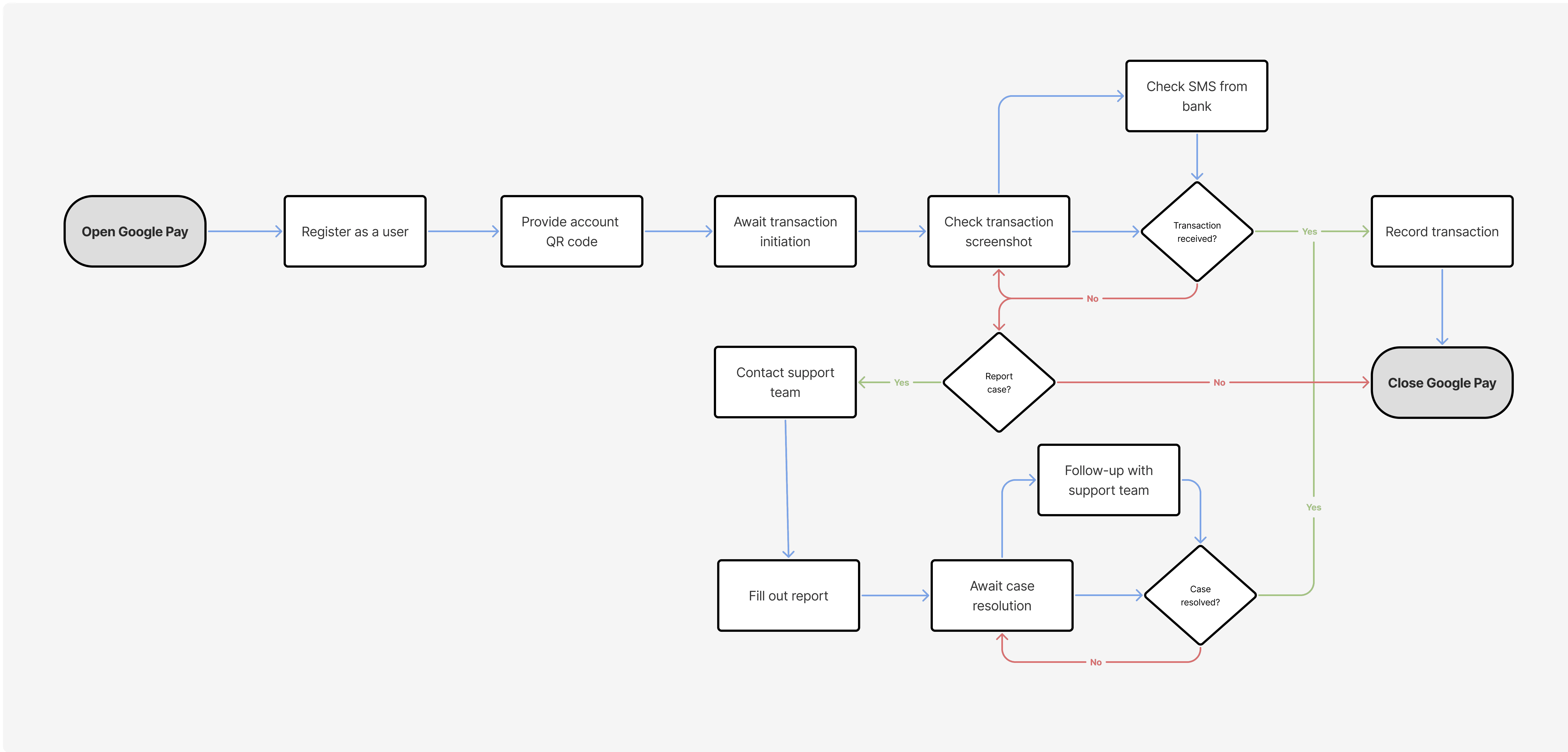
User flow Diagram
Visualizing the structure and functionality a merchant engages with during typical Google Pay usage, identifying cyclic issues and decision points where improvements could be made
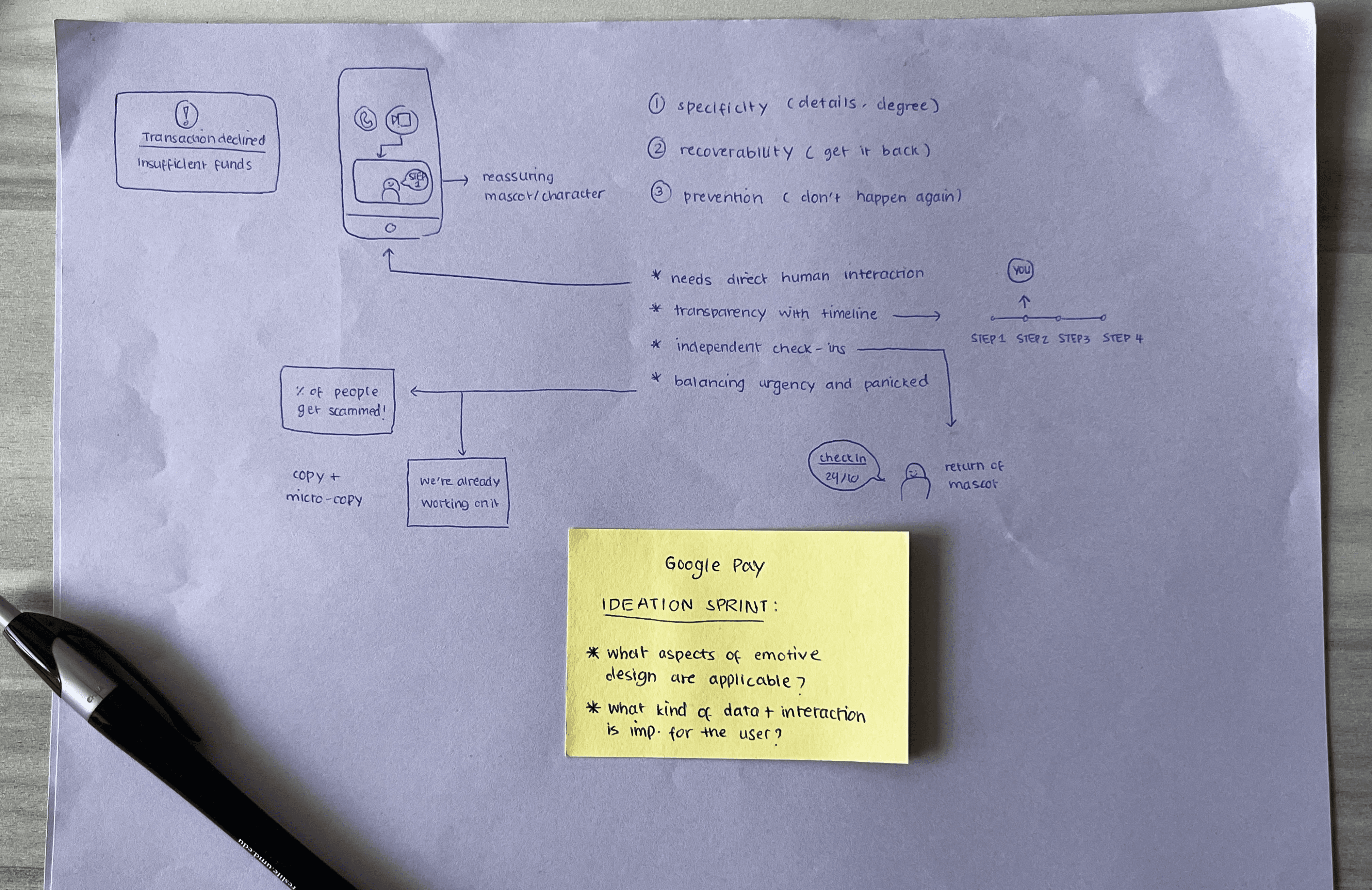
Low-fidelity sketches
Sketching initial solutions based on the 3 pain points and user flow diagram, allowing me to experiment with validation patterns in design sprint exercises
// WORKING WITHIN CONSTRAINS
Material Design
Since Google Pay uses Material Design, I had to work with existing components while choosing appropriate versions to ensure nothing looked out of place. This required deep research into Material Design principles, component variants, and accessibility guidelines.
Core functionality
We were working with a very well-established application. We wanted to be mindful not to overwrite how it worked or any critical features. Our goal was to make the redesign as realistic as possible for implementation.
I collaborated with an engineer to assess technical feasibility at multiple points in the design process.
// FINAL DESIGNS
Google Pay, redesigned realistically and emotively
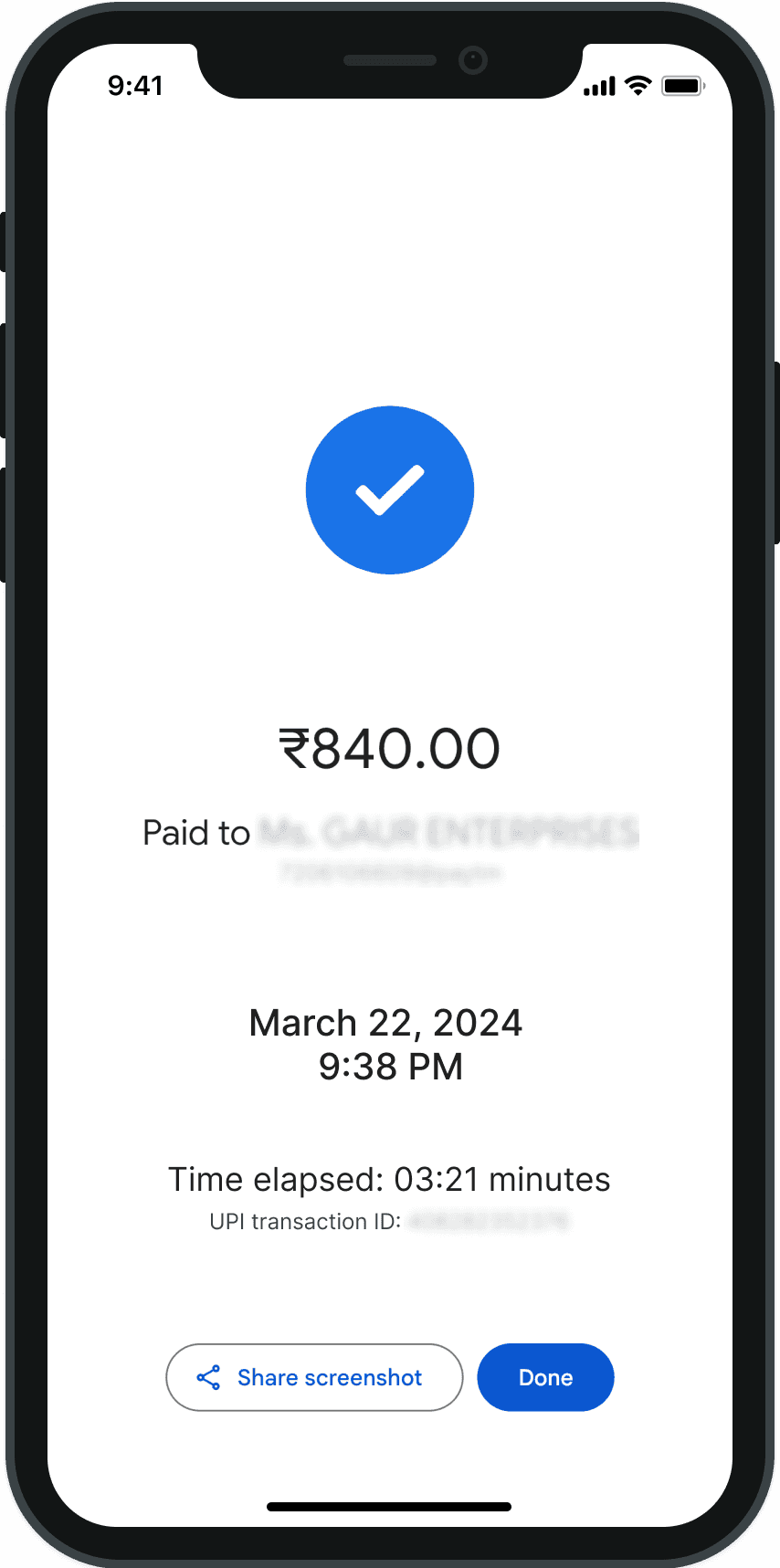
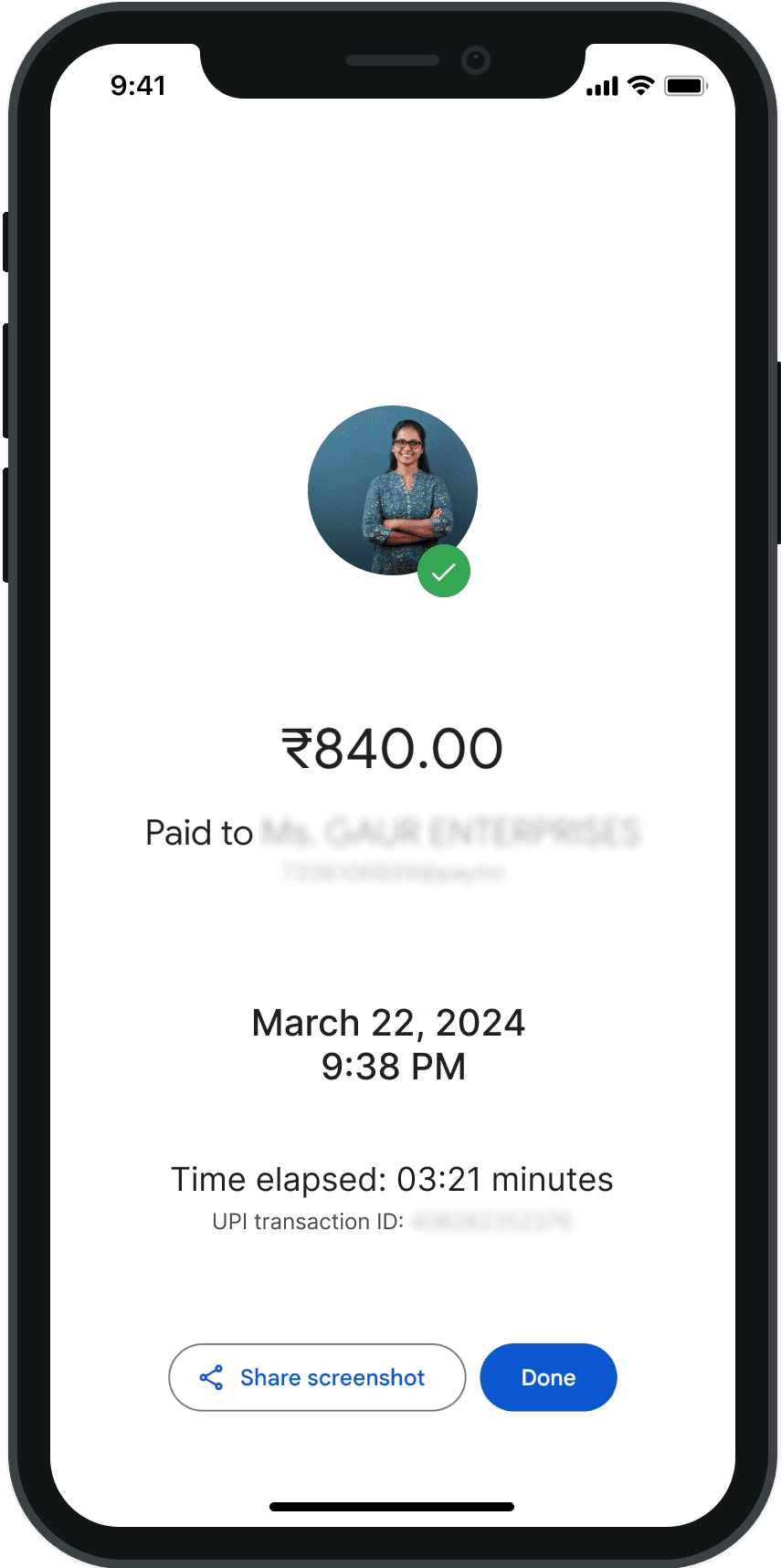
Transaction validation is difficult
-> Improve representation of transaction identifiers
Earlier signifiers are easy to fake and hard to recognise by merchants. New signifiers (profile image and elapsed time clock) cannot be reproduced easily and are visually perceptible.
Feasibility check
Google Pay already links to a user’s Gmail account and displays the associated profile image. This will just have to be transferred to the transaction status page.
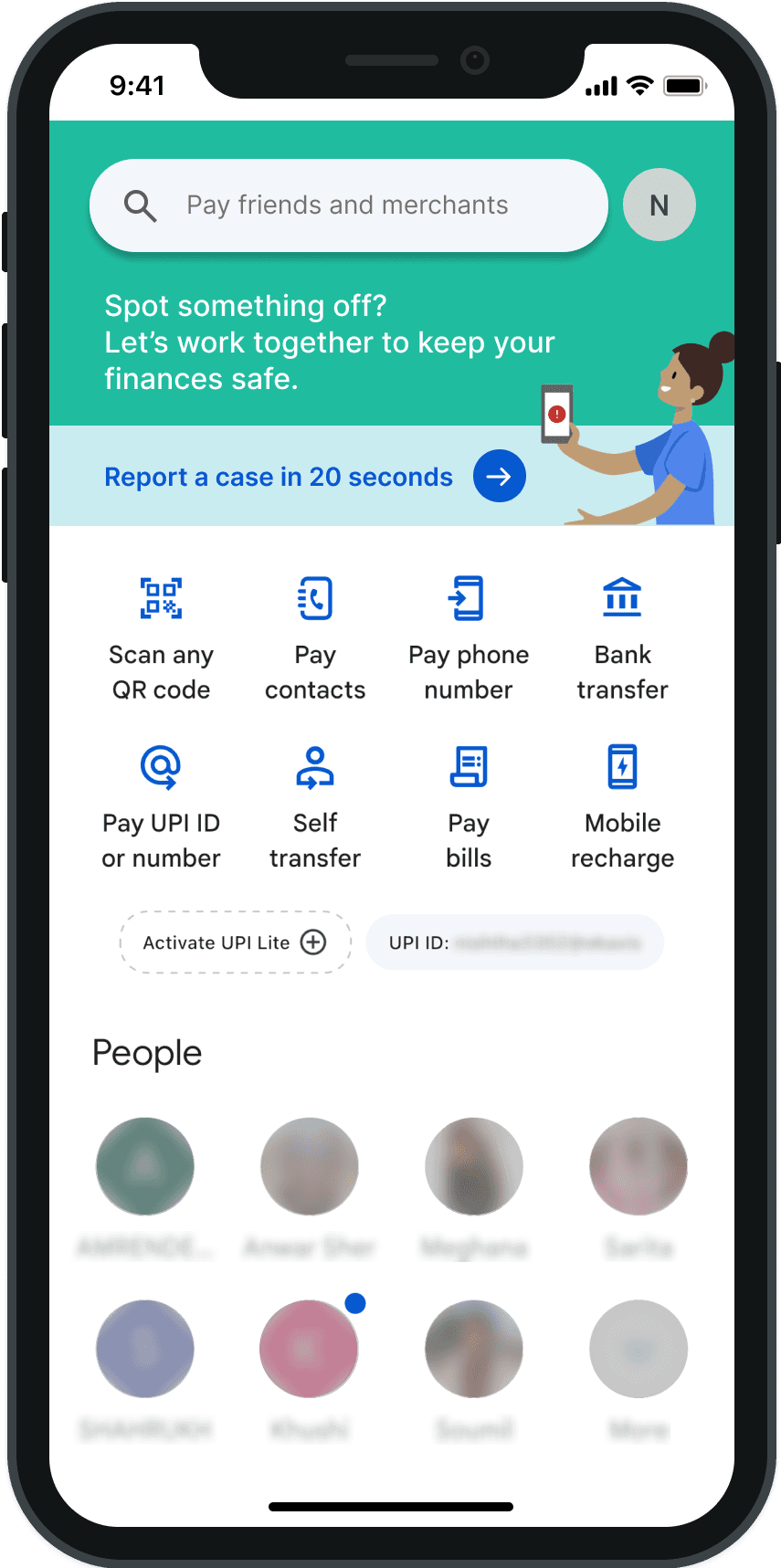
Missing urgency in actions
-> Shorten user journey to support
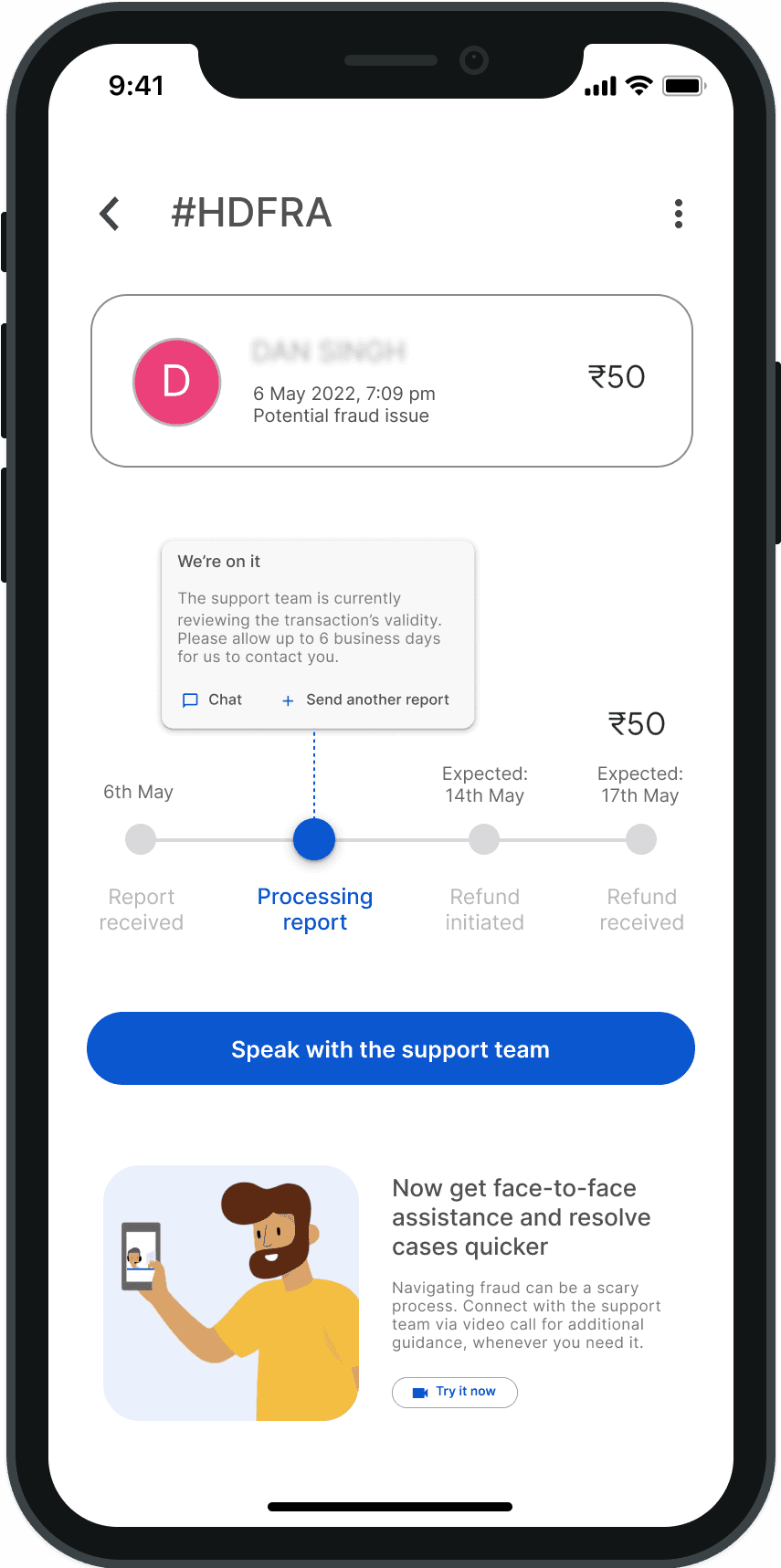
An at-risk user will require the quickest path to assistance. Especially if it’s a suspected case of fraud, then all actions become time-sensitive. Shortcuts to fraud support reduce delay.
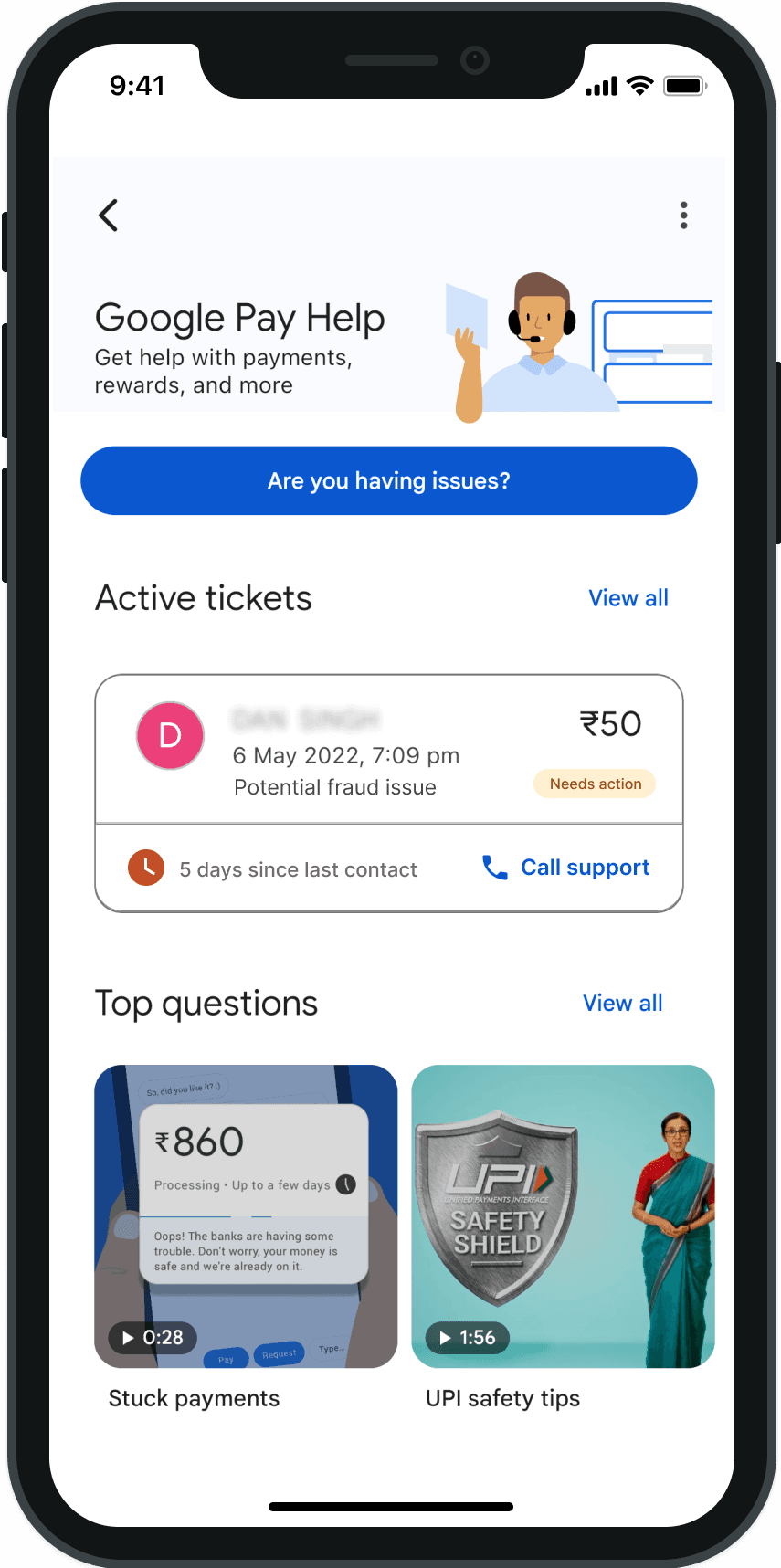
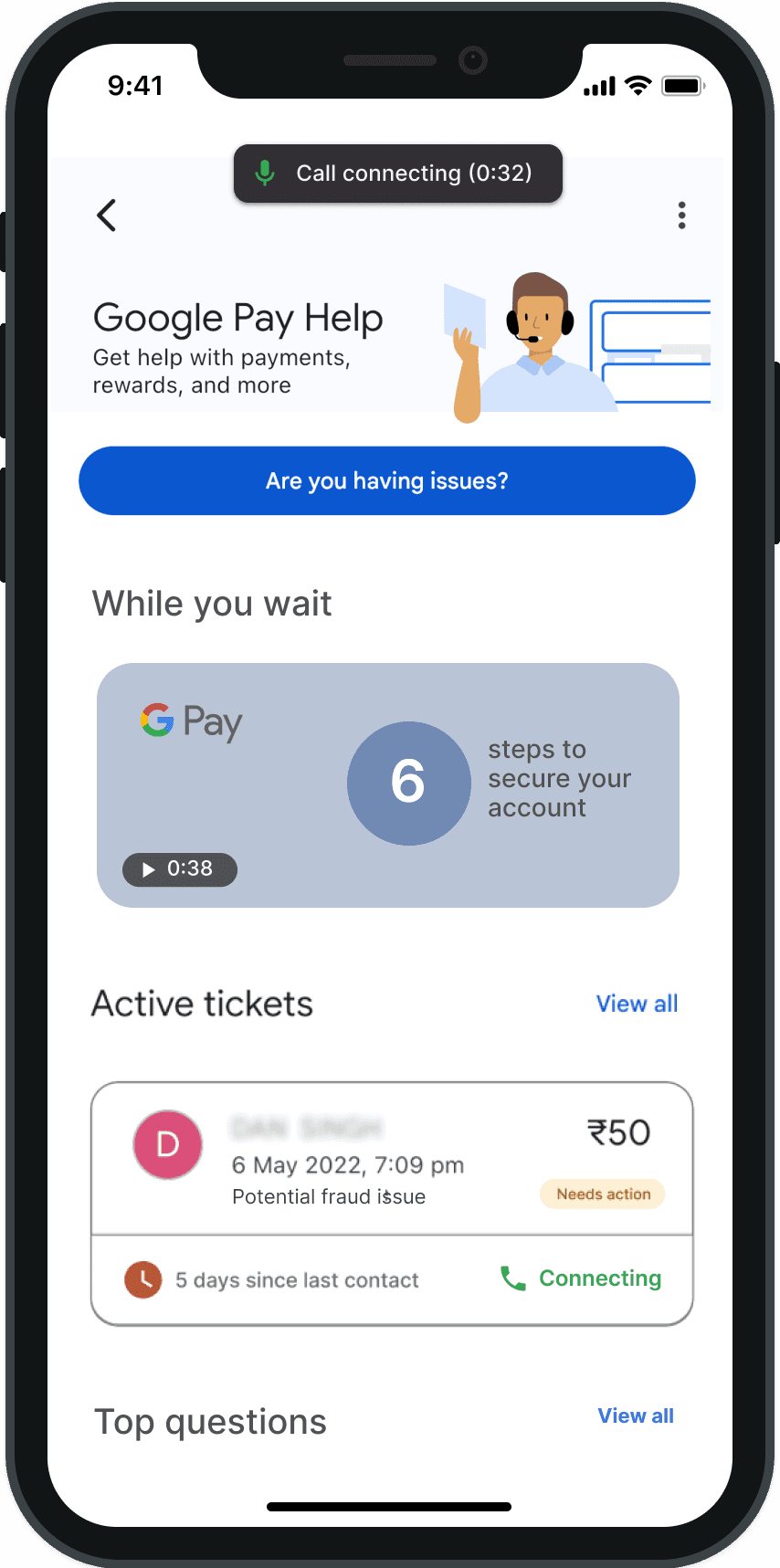
Lack of information transparency
-> Add multiple information points
In sensitive scenarios like scams and frauds, a user needs as much information as possible. Describing the resolution process and providing stage-wise updates builds trust.
// IMPACT
Across 3 weeks, I redesigned 3 critical user journeys for an underserved subset of users in the Google Pay community, validating my concepts with vendors themselves
During concept testing, we received positive feedback for the new experience, with vendors reporting increased confidence and less ambiguity in transaction validation.
We achieved our primary goals of redesigning the fraud prevention and support user journey, alongside our secondary goals of emotive design.
// RETROSPECTIVE
Inclusive design requires a deep level of empathy and connection with the end-user
My main takeaway was the importance of designing for the edge case; the users that get overlooked. It takes real skill to empathize with a perspective that's unfamiliar to you, especially when you might not have access to extensive user research.
This project taught me to translate systemic challenges into accessible design. The best solutions aren't the most innovative, they're the ones that make sense for the people who need them most.
If I had more time, I would…
Test real-time features in realistic scenarios to ensure they work appropriately in high-pressure, fast-paced environments
Expand our user personas beyond the kirana store use case to see how other sectors (healthcare, street vendors, etc.) interact with digital payments.
Evaluate other regional digital payment apps (PhonePe, PayTm) and see how these features could be applicable there.
Thank you for reading <3
Please reach out if this project resonated with you. We're currently trying to get our work reviewed by the Google Pay India team so any and all feedback is welcome.